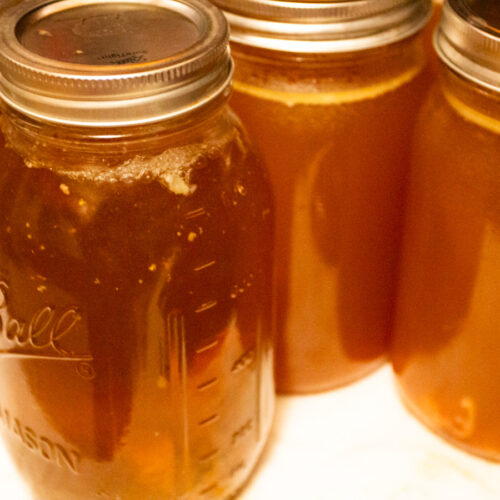
Bone Broth
A delicious, high nutrient broth to use as a base for all of your cooking.
Equipment
- Stock Pot, Slow Cooker, or Instant Pot
- long handled spoon for stirring
- Strainer
Ingredients
- Leftover bones from chicken ham, pork, beef, or even fish.
- Apple Cider Vinegar
- Bay Leaves optional
- Vegetables if desired to make a joint vegetable and bone broth
- High nutrient mineral salt Sea Salt, Celtic Sea Salt, Himalayan Sea Salt, or something to that effect.
- Filtered Water
Instructions
- The amount of time this recipe will take depends on whether you are using an Instant Pot, a Slow Cooker, or cooking it over the range in a stock pot.
- Add bones to stock pot, instant pot, or crock pot.
- Fill the pot with filtered water.
- Add Apple Cider Vinegar, Salt, and chopped vegetables.
- Stock Pot: cover with a lid let it simmer on the stove top all day. It should develop a foam on top as it boils. Stir occasionally throughout the day to prevent pieces from sticking to the bottom of the pot.
- Slow Cooker: cover with the Slow Cooker Lid and turn on low. It should cook without requiring stirring, but you can check on it periodically to make sure. You will want to let it cook longer so the bones can de-mineralize into the water fully.
- Instant Pot: If your IP does not have a soup button, turn it onto High Pressure for 10 minutes. It will take some time to get up to pressure, and then the timer will automatically begin. Allow the pressure to decelerate naturally without releasing the pressure valve. You want to keep the liquid in as much as possible.
- Sterilize quart jars, lids, and rings for pressure canning.
- While the broth and jars are hot, use a wide mouth funnel to add broth to jars.
- Wipe rims with clean cloth. Add lids to fingertip tight.
- Add jars to pressure canner with rack at the bottom.
- Follow manufacturer's instructions as to how much water to add to the pressure canner. Make sure that all parts are assembled (gauges, vents, etc.) according to the instructions provided with the pressure canner.
- Bring the pressure canner to pressure for about 10 minutes before adding the weighted gauge.
- Process quart jars for 25 minutes at 10-11 pounds of pressure. (Adjust for altitude- consult the Ball Book of Canning or Everything Worth Preserving for detailed information and instructions about pressure canning.)
- When the pressure has decelerated to zero, remove the lid away from your face and lift jars out with a jar lifter onto a clean towel. (This is necessary to protect your countertops and the jars from the heat.)
- The jars should sit overnight at least before moving to long term storage.
- Remove rings; check the seal of each jar. If any jar did not fully seal, put it in the refrigerator to use first.