

“It’s naughty to fret, but I do think washing dishes and keeping things tidy is the worst work in the world.”
— Little Women, Louisa May Alcott, Chapter One
This letter may contain affiliate links. As an Amazon Associate I earn from qualifying purchases, at no extra cost to you.
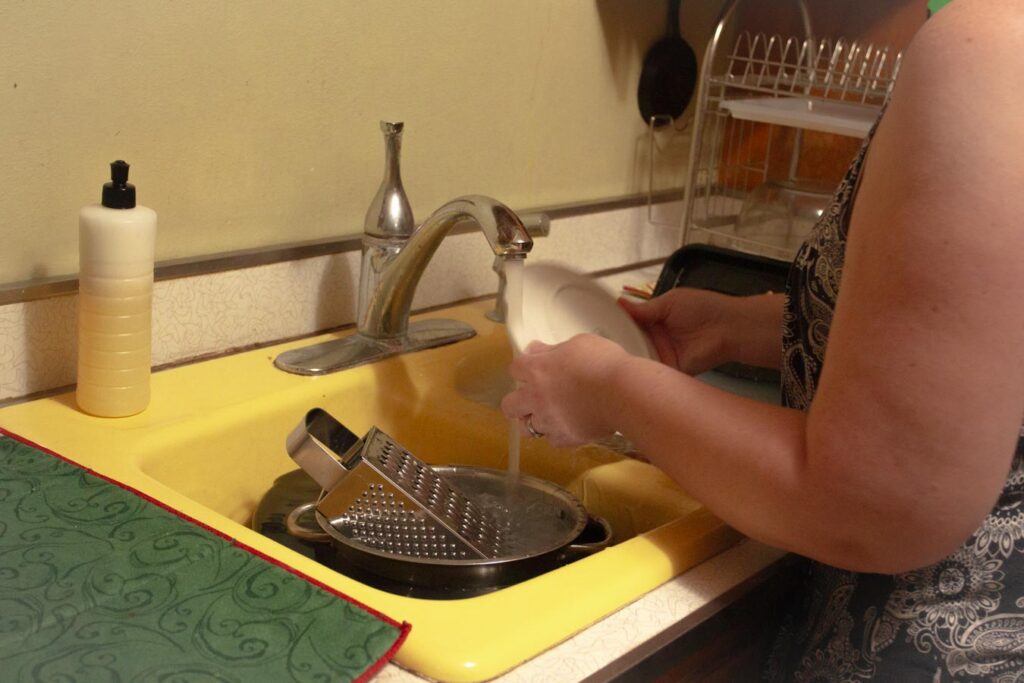
Jump to RecipeThis all natural dish detergent recipe is perfect for soaking those larger pots with stuck-on food, or hand washing a load of dishes in the kitchen sink.
Mixing your own hand washing dish detergent is much easier than you might realize, and costs pennies on the dollar of a normal bottle of dish soap. It is free of dyes and chemical fragrances, but you can add any essential oils that you prefer. When you are building a toxin-free home, this is a great recipe to have in your files.
I have always wanted to learn how to make soap (making it from lye and oil is still on my bucket list!), but there is another option that I did not realize: Castile Soap. Castile soap is both affordable, all natural, and a little bit safer for dipping your toe into the world of soap making. Lye is a very strong chemical, and it will burn your skin and eyes if you do not use the right protective gear, or if you mix it improperly. For that reason, many moms of littles opt to buy a big bottle of Castile Soap to mix household soaps, completely bypassing the process of saponifying natural oils with lye. Melt and pour is a good middle ground to begin your soap making journey.
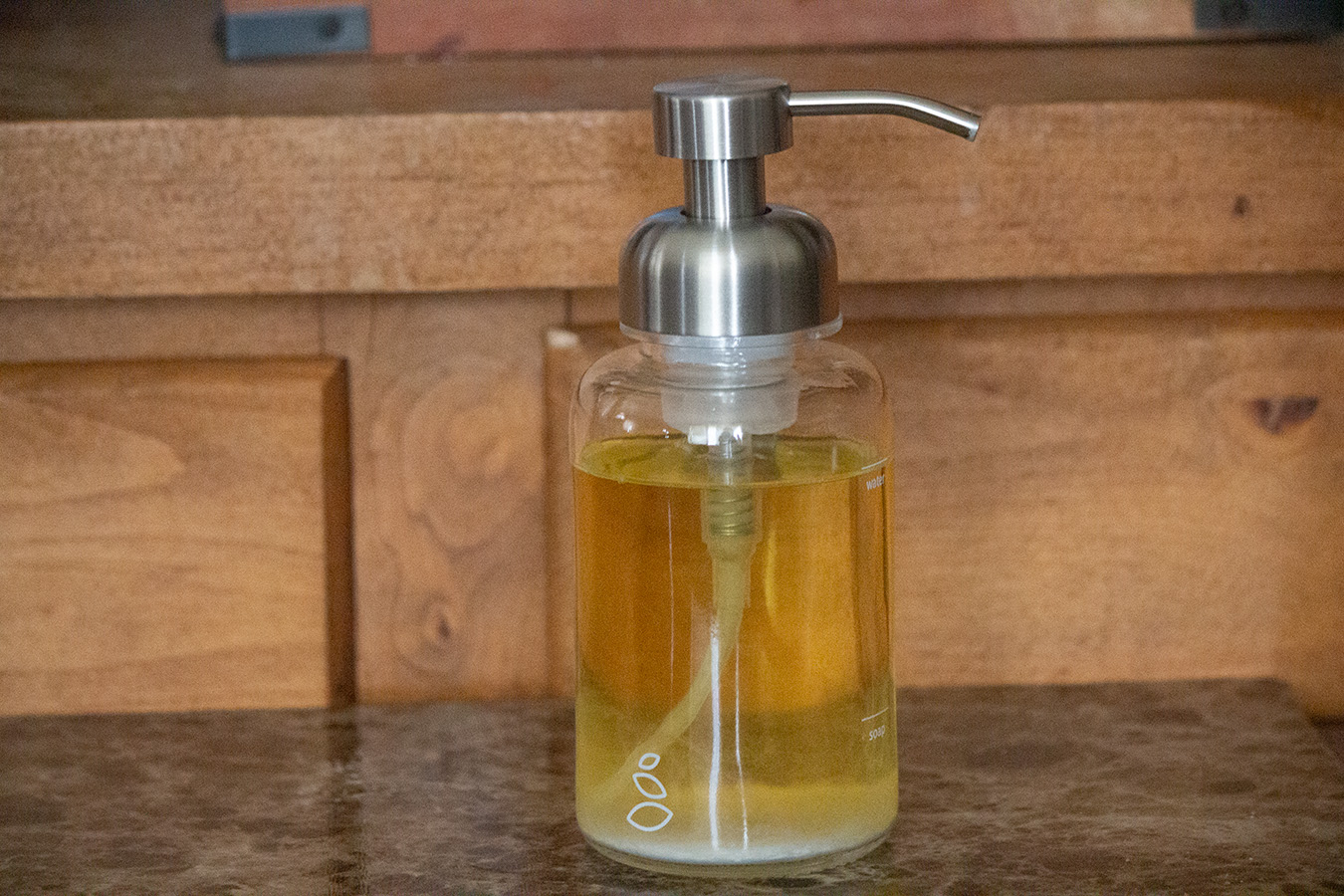
Mixing soap in this way is as simple as pouring water, and if you make it a habit, you will find yourself refilling your soap dispenser while you are on autopilot. Driving to the store and buying a bottle of dish soap each time you run low truly takes up more time and energy than refilling this bottle. This recipe contains only simple, basic ingredients that are easy to get, or that you may already have.
But, if you do not want to pause to refill a new bottle every time, you can easily have a soap making day and refill a bunch of dish soap bottles at one time. Soap does not go bad in your pantry, so there is no harm in keeping 6 or 8 on the shelf at one time for you to grab as you go about your busy day.
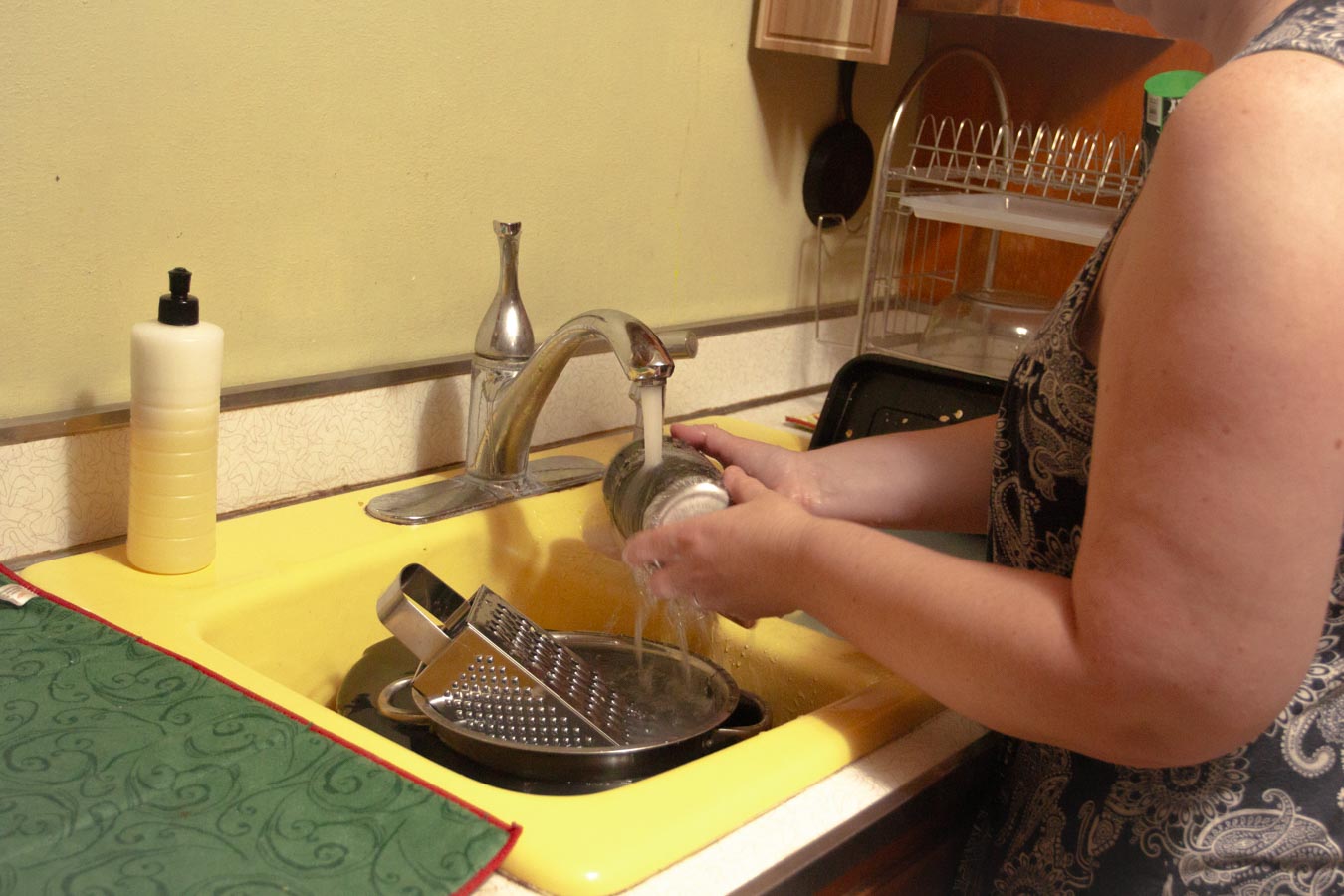
I really like how this soap lathers, and it leaves both my skin and the dishes clean as can be. I am not a fan of washing a load of dirty dishes in the kitchen sink, but I appreciate having a detergent that leaves the dishes cleaner and also smells good while I am doing it.
DISH DETERGENT TIPS:
- Making your own dishwashing detergent is only for hand washing; there are other recipes for dishwashers.
- This type of soap making is 100% non toxic and natural because the bottle of pre-made Castile soap allows you to bypass the process of saponifying oil with lye.
- DIY Dish Detergent will save you a lot of time and money. Time and money spent not at the grocery store is a win to me!
- The essential oil fragrance you choose is up to you. I prefer a clean lemon scent, or perhaps lavender or rosemary.
- If you want to make an antibacterial soap, add 4-5 drops of either Peppermint or Ginger Essential Oils.
FAQ:
Is homemade dish detergent cheaper?
Homemade dish detergent can range in price anywhere from 50 cents to several dollars per bottle. The difference is in the ingredients you choose. It is possible to make it very cheaply, but you have to buy the ingredients up front that will last you quite a while.
How to you make homemade dish soap step by step?
Making homemade dish soap is very easy. Just add the Castile Soap, baking soda, grated bar soap, essential oils, and hot water to your bottle. Give it a little shake, and that’s it!
How long does homemade dish soap last?
Soap can last on your shelf indefinitely. This goes for any type of soap, not just homemade Castile Soap.
What are the best essential oils for DIY dish soap?
The best essential oils are largely up to your preference. If you prefer citrus, you can add orange, lemon, or lime. If you want a floral scent, you can use lavender or rose. Peppermint and Ginger essential oil have more antibacterial properties than the other fragrances, so you can use those if you are trying to make a more antibacterial soap. However, other than that, it is mostly up to your preference.
What is Castile soap?
Castile soap is coconut or olive oil saponified with lye. (Occasionally, castile soap contains another type of oil, but olive oil is the most common oil.) Once it has been saponified, it is a soap concentrate that can be used to make other types of soap products and detergents.
Can I make soap at home?
It is possible to make any type of soap from home. You can begin with base ingredients of lye, oil, and water, or you can buy a melt-and-pour kit, which bypasses the harsher first step of saponifying the oil and water. You can also buy a large bottle of Castile soap from most grocery stores and mix your own soap from there.
Why isn’t lye used in soap anymore?
All soap is oil that has been saponified with lye. However, by the time you use it, the strong chemicals of the lye have been worked out, and you are left with the finished soap product.
Can you make soap without lye?
All soap originated with the chemical process called saponification, which requires lye. However, you can bypass the saponification part of the process and purchase a melt-and-pour soap making kit, or you can buy a bottle of liquid Castile soap concentrate for making all kinds of soap products.
Where does lye come from?
Lye is an alkaline liquid made by mixing wood ash with water.
What ingredients besides soap will help clean my dishes?
You can wash dishes in a number of ways. Cast iron pans are cleaned with oil and heat, or a chain mail scrubber. For more delicate non cast iron, citric acid (lemon juice) will help with hard water stains and food that is stuck on. Baking soda and vinegar can also help clean dishes. A mixture of Borax and Washing Soda can wash just about anything. There are many ways to clean things naturally.
How did people make soap before modern soap?
Historically, people boiled wood ash and animal fat together to make soap. However, going back further in history, many people cleansed themselves with plain oil and water. Using lye, which comes from wood ash, we still saponify oils in a similar way to create soap.
DISH DETERGENT INGREDIENTS:
- 1/2 C. Castile Soap
- 1 Tbsp. Baking Soda
- 1/4 C Bar Soap, Grated
- 1 1/2 C. Hot Water
- 1 Tbsp. Vegetable Glycerin
DISH DETERGENT TOOLS:
- 1 soap dispenser (squeeze bottle or pump)
- Sauce Pan
- 1 Funnel
- 1 Cheese grater
HOW TO MAKE YOUR OWN DISH DETERGENT:
- Grate bar soap into sauce pan.
- Add Baking Soda, Grated Bar Soap, Castile Soap, Vegetable Glycerin, and Essential Oils to the sauce pan.
- Add water.
- Heat up while stirring until all particles are dissolved.
- Place funnel on top of your squeeze bottle or pump.
- Allow to cool.
- Pour soap mixture into bottle through funnel.
- Give it a light shake, and you are done!

Homemade Dish Detergent Recipe
Equipment
- 1 soap dispenser (squeeze bottle or pump)
- 1 Funnel
- 1 Cheese grater
Materials
- 1/2 C. Castile Soap
- 1 Tbsp. Baking Soda
- 1/4 C Bar Soap, Grated
- 1 1/2 C. Hot Water
- 1 Tbsp. Vegetable Glycerin
Instructions
- Grate bar soap into sauce pan.
- Add Baking Soda, Grated Bar Soap, Castile Soap, Vegetable Glycerin, and Essential Oils to the sauce pan.
- Add water.
- Heat up while stirring until all particles are dissolved.
- Place funnel on top of your squeeze bottle or pump.
- Allow to cool.
- Pour soap mixture into bottle through funnel.
- Give it a light shake, and you are done!
HOW TO USE:
- This recipe is made without citric acid, salt, white vinegar, washing soda, and borax. However, if you are trying to really scrub some burnt on food particles, you can put some lemon juice in the pot and allow it to soak for a few hours. The citric acid in the lemon juice will help erode the bunt food. (Citric acid is also great for hard water stains.)
- Kosher salt is a good abrasive to scrub stainless steel pots and pans with.
- Ready to take the next step into making your own laundry detergent? Check out this video from At Home with Kelli. I am looking forward to trying it, too!
YOU MAY ALSO ENJOY:
- When Gardening Goes Wrong – Gardening is time consuming, and it can be discouraging. However, the value is not merely in home grown produce or flowers. (Don’t get me wrong, that is a HUGE benefit, and the reason that people get into it in the first place!) Gardening is also a way to get closer to the earth, to get closer to our food sources, to spend time in nature without screens. The process is just as valuable as the end product. Gardening is an education – and, as you keep doing it, you will definitely “level up” and learn how to mitigate challenges. The good news is, anyone can garden.
- Sourdough Lemon Pound Cake Recipe – When you are busy with children, schooling, work, household stuff, making a pound cake sometimes feels as likely as going to the moon. Especially a sourdough one. But, it is really pretty simple. I whipped this one up in just a few minutes. Kids love to dump the ingredients in, too, and watch the mixer spin the paddle around.
- A Simple yet Beautiful Charcuterie Board – How hard are charcuterie boards to make? A beautiful spread of meat, cheese, dip, and other flavors looks so intimidating to make. In order to make it look like an art form, how much talent do you really need?
- When to Plant a Fall Garden – If you’re not planting a fall garden, you are really missing out! A variety of edible plants grow very well in cooler conditions. By September, many of the summer pests have died back. As a bonus, you don’t have to water your garden as often because the soil retains moisture on its own in the fall.
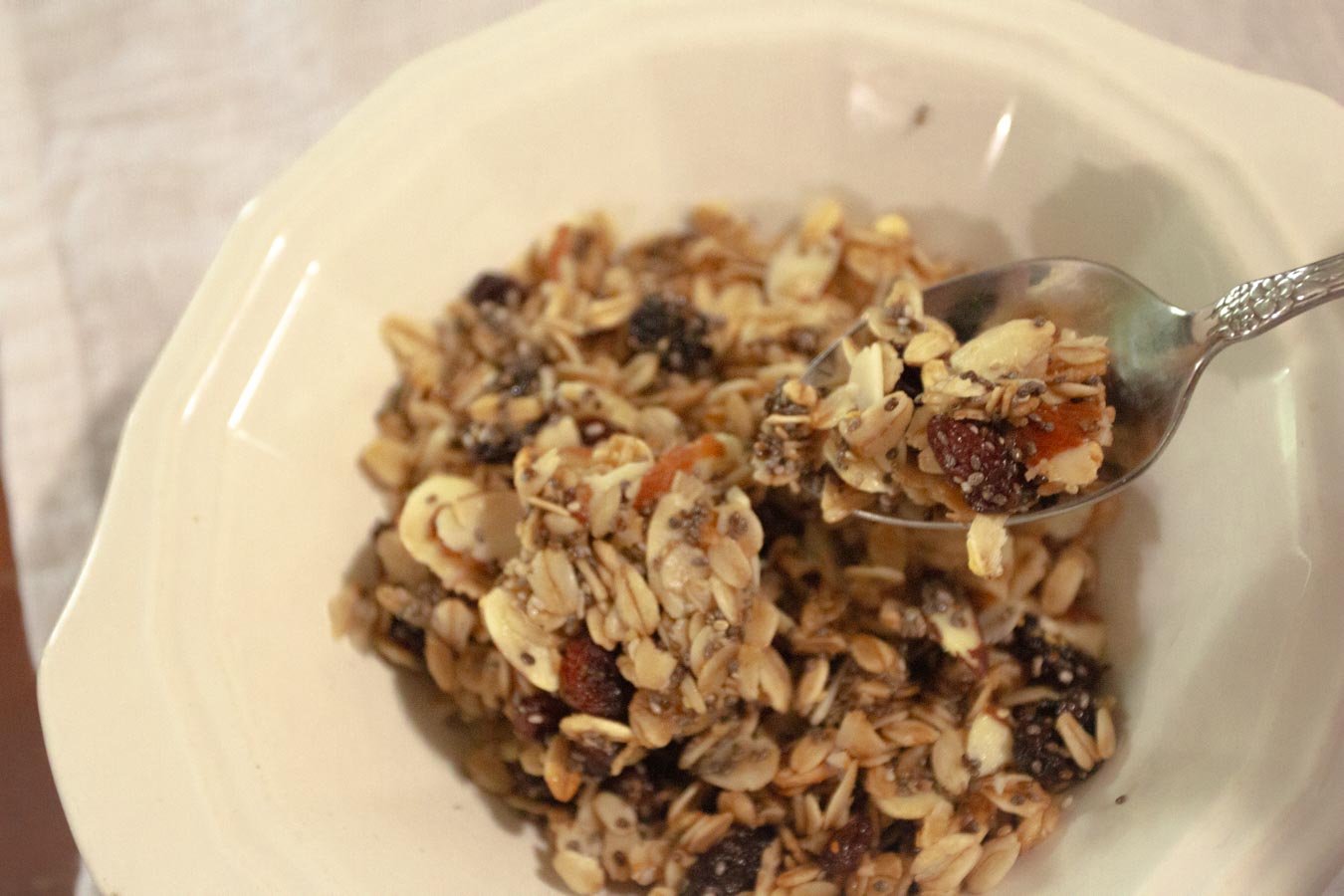
- Easy Homemade Granola RecipeA beautiful, crunchy texture with a hint of maple, vanilla, and toasted nuts.

2 Comments