


“His kindness was not confined to words; for within an hour after he left them, a large basket full of garden stuff and fruit arrived from the park…”
— Sense and Sensibility, Jane Austen, Chapter VI
This letter may contain affiliate links. As an Amazon Associate I earn from qualifying purchases, at no extra cost to you.
Jump to RecipeThis delicious, unseasoned tomato sauce is the base for so a wonderful comfort foods: tomato soup, spaghetti sauce, pizza sauce, chili, or ketchup. So many of our favorite foods are based on this original classic.

This water bath canned recipe is a simple way to preserve your harvest because tomatoes are an incredibly hearty and versatile crop. Rinse, peel, and prepare for Mason jars! It is simple and yet so essential.
It has not been that long since people preserved food at home all the time. Home food preservation used to be a way of life because the ability to purchase food was much more scarce in generations back. People grew big gardens and made them last until the next year. You can do it, too. Canning is not difficult, but you do have to follow the safety guidelines to ensure that your food is preserved in the best way possible until you are ready to pop the lid.
When you have a busy schedule it seems that growing and canning tomatoes is just an insurmountable feat. However, I have found two things to be true: 1. You don’t have to dedicate a full day to canning tomatoes. It is OK to do it in small batches. And 2. You don’t have to do everything. You will make room for the priorities. There are years when you can share extra fresh tomatoes with friends, and slice what you keep for fresh tossed salads. Those years are OK, too.
Canning vegetables and fruits doesn’t have to be hard or time consuming. Spend one evening afternoon rinsing and peeling, then sterilize and fill your jars for the water bath.
I have found that if I am going to do it, I want to do enough for at least a few meals. With tomato sauce, it will last a lot longer than that. It is wonderful to have a jar ready to go within reach at any time because dinner fatigue is real – no one wants to make a three course meal every day. This easy tomato sauce makes meals go quickly day after day throughout the year.
My family (or is it just me?) are so thrilled to see little green tomatoes burst into funny shapes and develop yellow and red streaks. Tomato season is coming, my friends. It is not something to miss.
A ridiculously versatile sauce, you can season it in the pot for a wonderful spaghetti sauce, pizza sauce, or any other type of tomatoey comfort food that you can think of.
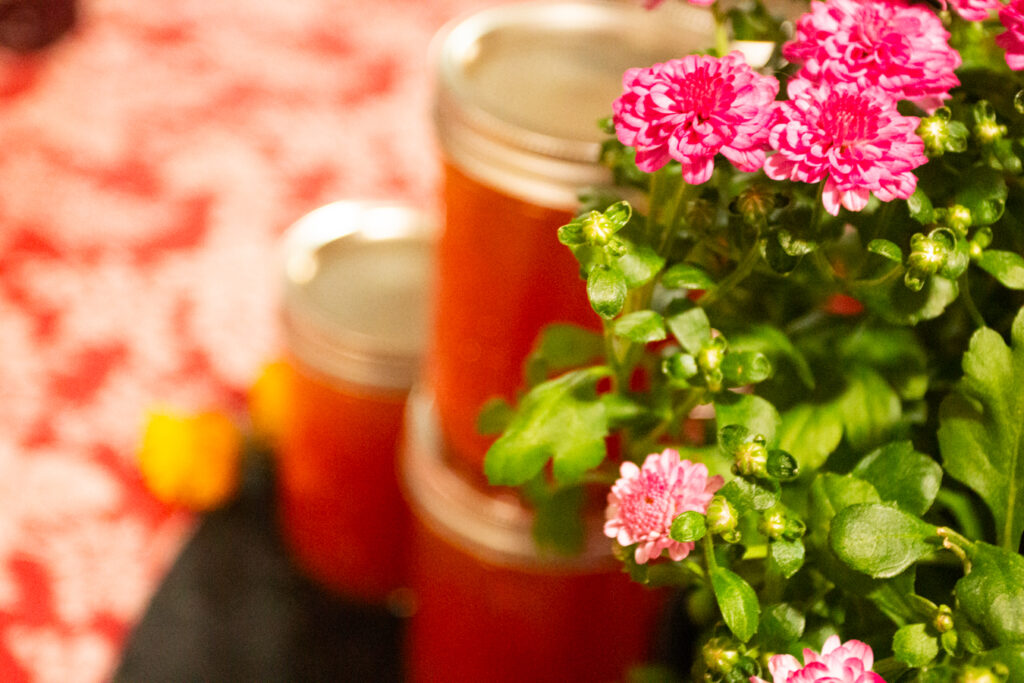
TOMATO SAUCE CANNING TIPS:
- Make sure to follow the instructions for your altitude. The standard instructions may need to be adjusted depending on where you live because the pressure will vary based on altitude.
- Leave a 1/2 inch headspace in all of your jars prior to securing the lid and ring.
- Wipe the rims with a clean cloth before securing the lid and ring. A remnant of food can interfere with the quality of the seal because the lid needs to maintain a good “grip” on the rim.
- If any seals loosen while in storage, discard the food into your compost and do not eat it. If this happens, it is likely that the food has gone bad because the pressure inside the jar disrupted the seal. It is also possible that the lid did not secure well from the beginning. In this case, the lack of pressure has probably also caused the food to go bad.
- Remove the rings when you are done so any bad seals will be discovered easily.
- If you feel that a jar was compromised in the process of canning and did not go through exactly the same process as the other jars, stick it into your refrigerator when cool and use that jar first.
- The sauce may be very thin. You can either boil the water out of it while stirring to thicken it up, or you can process it as-is and thicken it after opening. It is up to you!
Please evaluate these instructions against the USDA and FDA guidelines for safety. Please read the official guidelines for safety.

TOMATO SAUCE FAQ:
How long do you can tomatoes in a water bath?
To can tomatoes in a water bath, process them for 40 minutes for quarts and 35 minutes for pints. (But please adjust for altitude.)
Do you have to put lemon juice in canning tomatoes?
Lemon juice, citric acid, or vinegar will increase the acid level in the jar because tomatoes are lower acid foods. The high acidity creates an environment inside the jar that is hostile to harmful bacteria.
Do I need to add salt and lemon juice when canning tomatoes?
The salt not only adds flavor, but salt is also a fundamental ingredient that helps create a hostile environment to harmful bacterias. (Many fermented foods include salt for this reason.) In canning, if the recipe calls for salt, it is partially for flavor and partially for food safety because salt is a natural food preservative. (Remember salt pork, or sauerkraut?). The pressure of the seal as well as the ph level inside the jar will help protect the food, but salt is a third layer of safety to ensure that the food inside is safe on the shelf.
Can I substitute vinegar for lemon juice in canned tomatoes?
The point of the lemon juice is to add acidity to your jars. You can water bath can tomatoes if you add acid to them to them to ensure food safety. Vinegar can be a perfectly safe substitute in terms of food safety (assuming the vinegar is a 5% strength). But, the question then needs to be asked about flavor. If you like the flavor that vinegar adds to your jars of tomato sauce, then it will work just fine. But, many people have found that they prefer the flavor of lemon juice in the jars instead.
Should I use a bottled lemon juice to can tomatoes? Why can’t you use fresh lemon juice for canning?
Unless you have a way to test the acidity of fresh, home-squeezed lemon juice, you should use bottled lemon juice or vinegar to ensure that it is strong enough to preserve your food safely.
Why do you remove the skin and seeds before canning tomatoes?
Unlike potatoes, tomato skins do not affect the safety of the product once canned. (Potato skins should not be canned because of botulism, but tomato skins are fine to use.) However, most people do not like them in their sauce and pick them out anyway. Also, tomato skins and seeds add a bitter flavor to the sauce. This is why you might see a slice of tomato on a sandwich with the seeds in it, but you never see seeds in tomato sauce. The process of making the sauce and heating it up to seal the jar brings out a slightly bitter flavor that many people do not like.
Do you have to use a pressure canner to can tomatoes?
Tomatoes are amongst the small group of produce items that can be pressure canned or water bath canned because they are so versatile. Pressure canning will create a tight seal in the jar that will help preserve the tomatoes without adding the extra acid. However, if you water bath can the tomatoes, the seal is not as pressurized as they would have been in a pressure canner. In water bath canning, you will have to add an acid to the jars to ensure that the food inside is safe and preserved until you open it.
What are low-acid foods, and why is that significant?
Low acid vegetables and fruits cannot be water bath canned, but some can be water bath canned if you add an acid to it. For example, cucumbers can be pickled in vinegar for a water bath canner, but you cannot water bath can them without the acid because cucumber is a low acid food. Before setting out to can vegetables and fruits, do some research on the vegetables you would like to can. Some can only be pressure canned, and some do better in the water bath canner because the greater amount of pressure destroys them.
High acid foods that are great for water bath canning include: apples, tomatoes, pickled vegetables, jellies, citrus, and most fruits.
What types of acid can I add to home canned tomato sauce?
The 3 most common acids to add to home canned tomatoes are vinegar, bottled lemon juice (not fresh squeezed), and citric acid. Any of these will work, but adjust for flavor according to what you like.
What is the difference between water bath canning and pressure canning?
The canning process for both is similar, but also very different. Pressure canning requires completely different equipment than water bath canning. Water bath canning can be done in any pot that is large enough to hold your jars and enough water to cover the top by about an inch. Pressure canning, as the name suggests, creates a pressurized vacuum that seals the jars tightly. They require fewer inches of hot water than water bath canners, and the jars are not fully submerged. Home canners are not as pressurized as commercial canners (the aluminum cans you can buy in the grocery store), so there are a few things that cannot be done in a home pressure canner. However, you can pressure can a lot of things at home using either water bath canning or pressure canning!
The processing time varies based on your altitude, the size of the jars, and the contents inside. For example, if you are water bath canning jelly jars full of strawberry jam, but are simultaneously preparing green beans in quart jars for the pressure canner, do the research on how long to process quart jars full of green beans in the pressure canner vs. smaller jars of jam in the water bath canner. When it comes to processing time, one size does not fit all. I recommend Melissa K. Norris’s new book entitled “Everything Worth Preserving.” In this book, Melissa lays out everything that you can preserve in this book and explains the best ways to preserve it, including processing times and other important pieces of information.
TOMATO SAUCE INGREDIENTS:
- 18 Tomatoes
- 1 Tbsp. Sea Salt
- 1/2 C. Lemon Juice
WATER BATH CANNING TOOLS:
- A sieve, strainer, or food mill for catching any seeds or stems that should not be in the finished product.
- Jars, lids, and rings
- Jar lifter
- Wide mouth funnel
- Debubbler
- Water bath canner
- Spoon for stirring
- Ladle
- Stock Pot
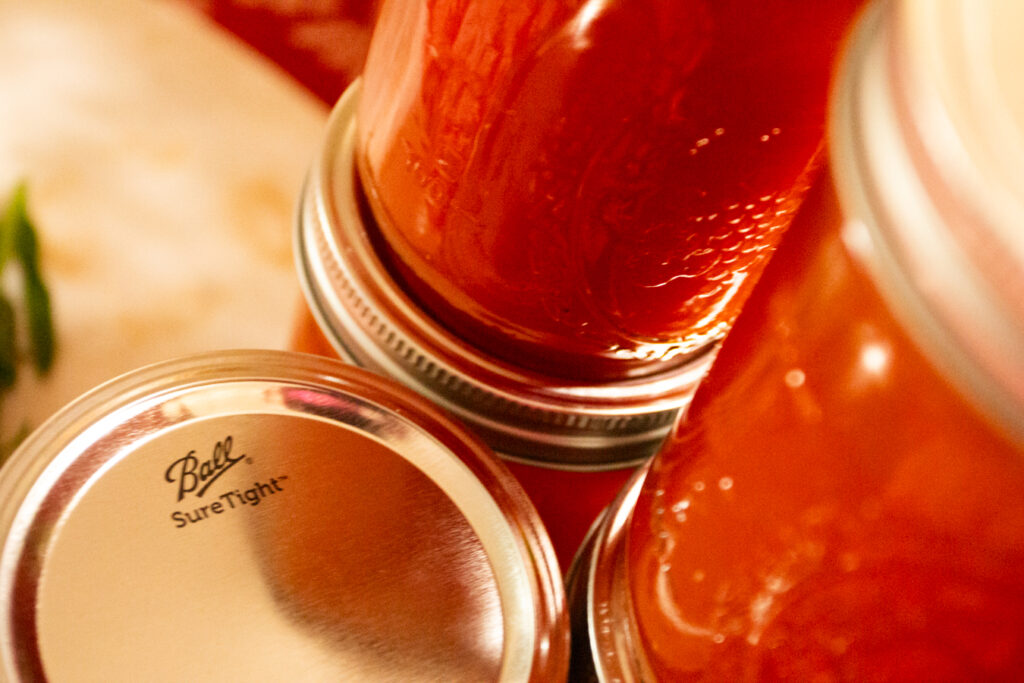
HOW TO CAN TOMATO SAUCE:
Canning advice: please follow the applicable rules and advice for canning safety. Your altitude, type of canner, jars, lids, and rings could require an adjustment to the recommendations given below. The Ball Book of Canning and Preserving as well as Everything Worth Preserving by Melissa K. Norris go into greater depth as to rules for canning safety.
- Quarter tomatoes.
- Add tomatoes to a stock pot with 1″ of water.
- Cook until the peels begin to crack and the tomatoes begin to soften. These are going to go through a food mill/ricer, so don’t worry about skins and seeds at this point.
- Add salt and lemon juice. Stir the tomatoes and mash.
- Strain hot tomato mixture through a colander, ricer, or food mill to catch any large bits that you don’t want in your sauce.
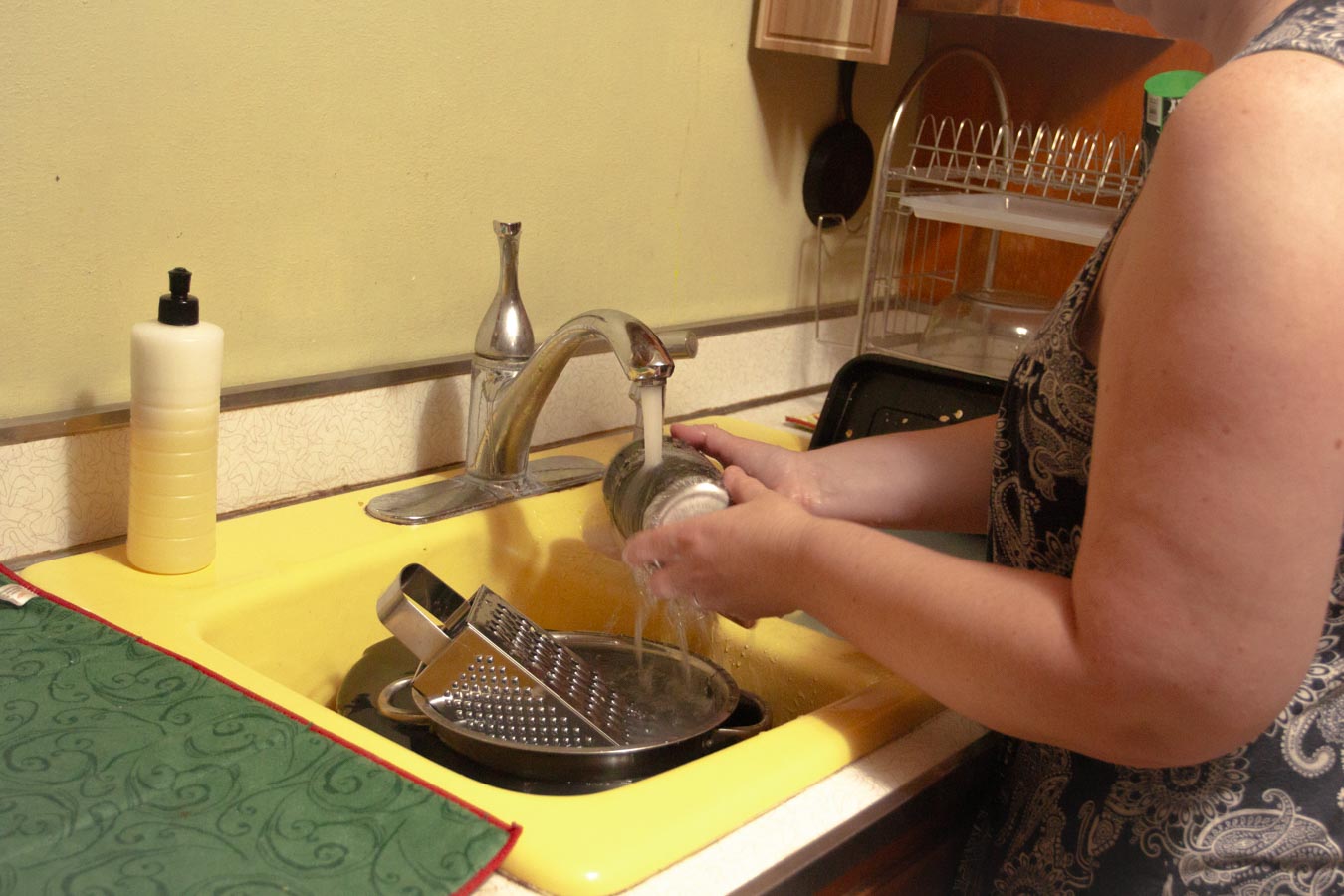
- Sterilize your jars and lids. You can do this in the sink with hot water, in a dishwasher with a heat dry, or in the water bath canner.
- Place rack on the bottom of the water bath canner.
- Add water to midway, but not full. (Once the jars are in the canner, the water should be 1″-2″ over the tops of the jars.) Begin slowly heating the water bath canner while you complete the rest of the process. It should be warm, but not boiling as you complete the rest of the process.
- Fill Jars and wipe rims with a clean cloth.
- Use the jar lifter to add the jars to the water bath canner. Once the jars are in the canner, measure the amount of water over the jars. Make sure it is in the 1″-2″ range.
- Adjust the heat to bring the water bath canner to a full rolling boil. Once it achieves a full boil, start the clock for 40 minutes for quarts or 35 minutes for pints (adjust for altitude).
- When finished, use the jar lifter to place the jars on a clean folded towel. (This is a heat barrier between the hot jar and your work surface).
- After 12 to 24 hours, remove rings and check seals by tapping on the lids. None of the lids should pop up when pressed.
- Store in your pantry for later use.
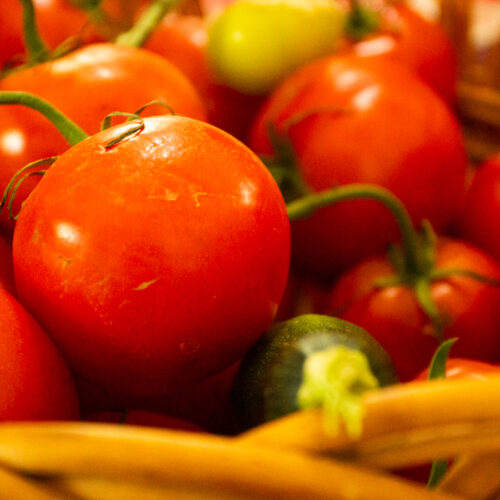
Tomato Sauce for Water Bath Canning
Equipment
- A sieve, strainer, food mill, or ricer for catching any seeds or stems that should not be in the finished product.
- Jars, lids, and rings
- Jar lifter
- Wide mouth funnel
- Debubbler
- water bath canner
- Spoon for stirring
- Ladle
- stock pot
Ingredients
- 18 Tomatoes
- 1 Tbsp. Salt
- 1/2 C. Lemon Juice
Instructions
- Canning advice: please follow the applicable rules and advice for canning safety. Your altitude, type of canner, jars, lids, and rings could require an adjustment to the recommendations given below. The Ball Book of Canning and Preserving as well as Everything Worth Preserving by Melissa K. Norris go into greater depth as to rules for canning safety.
- Quarter tomatoes.
- Add tomatoes to a stock pot with 1″ of water.
- Cook until the peels begin to crack and the tomatoes begin to soften. These are going to go through a food mill/ricer, so don’t worry about skins and seeds at this point.
- Add salt and lemon juice. Stir the tomatoes and mash.
- Strain hot tomato mixture through a colander, ricer, or food mill to catch any large bits that you don’t want in your jam.
- Sterilize your jars and lids. You can do this in the sink with hot water, in a dishwasher with a heat dry, or in the water bath canner.
- Place rack on the bottom of the water bath canner.
- Add water to midway, but not full. (Once the jars are in the canner, the water should be 1″-2″ over the tops of the jars.) Begin slowly heating the water bath canner while you complete the rest of the process. It should be warm, but not boiling as you complete the rest of the process.
- Fill Jars and wipe rims with a clean cloth.
- Use the jar lifter to add the jars to the water bath canner. Once the jars are in the canner, measure the amount of water over the jars. Make sure it is in the 1″-2″ range.
- Adjust the heat to bring the water bath canner to a full rolling boil. Once it achieves a full boil, start the clock for 40 minutes for quarts or 35 minutes for pints (adjust for altitude).
- When finished, use the jar lifter to place the jars on a clean folded towel. (This is a heat barrier between the hot jar and your work surface).
- After 12 to 24 hours, remove rings and check seals by tapping on the lids. None of the lids should pop up when pressed.
- Store in your pantry for later use.
HOW TO SERVE TOMATO SAUCE:
These ideas are for using your tomato sauce as a base after opening the jar. Pour the contents of the jar into a sauce pan with the following ingredients to make these tasty tomato sauce items:
- Pizza Sauce: add onion powder, garlic powder, Italian spices, and a tsp of sugar.
- Spaghetti Sauce: add onion powder, garlic powder, Italian spices, 1 basil leaf, red pepper flakes, 1 tsp sugar, and Worcestershire sauce. Add browned meat of choice.
- Tomato portion of Chili: add chili powder, garlic powder, cumin, and 1 tsp sugar.
- Tomato soup: add to sauce pan with onion powder, garlic powder, fresh basil, sugar, salt and pepper, 1/2 c. heavy whipping cream, and 2 c. chicken stock.
RECOMMENDED RESOURCES:
- Everything Worth Preserving by Melissa K. Norris
- The Ball Book of Canning
YOU MAY ALSO ENJOY…
- Easy No-Fuss SushiSince all the ingredients are cold, the art is in the rolling technique rather than the cooking technique. After you cook your rice, there is no additional cooking required.
- Simple Oat Milk – Oat milk has a reputation of being overpriced, slimy, and overall just better to avoid. However, this recipe will make a decent option if you need to add a carb to your morning coffee.
- How to Grow a Perennial Herb Garden – If you are new to gardening and couldn’t quite master the art of tomato growing (yet!), give herb gardening a try. When I first began gardening, some things were a complete flop. The tomatoes never came up, the beans dried out, the broccoli got eaten by pests. It was an abysmal failure except for one thing: the herb garden.
- Homemade Butter – Delicious, creamy homemade butter is the pinnacle of home cooking. As Julia Child said, “with enough butter, anything is good.” Savory homemade butter is easy to make, easy to freeze for another day, and requires very few ingredients.
- All Purpose Cleaning Spray – This fragrant, sweet smelling natural cleaner is powerful and effective. It will cut through fingerprints and grime from “doing life” with no problem at all.



2 Comments