

“Walter slipped away, not caring to see or be seen, but Rilla sat down on the steps, where the garden mint was dewy and pungent.”
— Rilla of Ingleside, L. M. Montgomery, Chapter V
This letter may contain affiliate links. As an Amazon Associate I earn from qualifying purchases, at no extra cost to you.
Growing a vegetable and herb garden has so many rewards and benefits. Originally, I wanted to save money. However, I didn’t realize that vegetable gardening has so many benefits to your mental and physical health. In our climate-controlled “greenhouse” environment, it is easy to maintain a degree of separation between us and the origins of our food.
I didn’t realize that in vegetable and herb gardening, the daily ritual of walking outside in the summer with a garden hose at dusk was going to become a treasured, golden ten minutes of every day. Getting into the sunshine, fresh air, and dirt would be a reward in and of itself.
My garden each year is always a hybrid mash-up of successes and failures. Last year, my tomato plants, onions, carrots, and green beans flourished, but my squash vine borers decimated my zucchini plants, and a squirrel family helped themselves to my sweet potatoes! I originally branched out beyond house plants so I could have some cheap, fresh vegetables. But, I didn’t have a green thumb. I didn’t know a thing. I just stuck seeds into the dirt and hoped they would grow. The first year was pathetic, but a few things grew in spite of my lack of knowledge. Thankfully, even the dumbest gardeners will have some wins. Little did I know, those few tiny wins would keep me walking down this path of learning about edible plants.
I’m years into this, and every season, I learn something new. Now, I really love the feeling of digging in the dirt, the smell of tomato plants, the sight of an earthworm doing its earthworm-thing beneath the surface. My knowledge of gardening heirloom vegetables and herbs is still in infantile levels, but I’ve become a student of the process, not merely a consumer of the product. Being an active participant in nature is something that brings much joy, and transforms tasks into treats.
When you can get any food you want at the grocery store, growing vegetables and herbs can seem downright archaic. When a food item comes in with dirt on it, a lot of people look at it and decide to order take out, where everything is prepared and beautiful.
It is a different mindset to get into vegetable and herb gardening, even in a small space, as opposed to grocery shopping. (I’m not knocking grocery shopping; we all do it!) But, there is a different mindset between shopping for what you need and putting it directly into your fridge or pantry and having six baskets of carrots that you can’t possibly eat all at once. Nor would you want to.
It is like a best kept secret: you CAN grow your own vegetables! Growing your own food is incredibly rewarding. My kitchen garden is here to stay.
For new gardeners, here are some of the things I have learned along the way:
- You will definitely lose some plants, whether to pests, drought, poor soil, or something else. It is OK. It happens to everyone. Plant that type of plant somewhere else the next year and change the amount of water you give it. (Maybe even experiment with direct sowing vs. seed starting, or buying starts instead of seeds.) Observe what happens. Sometimes you need several seasons to figure out what that plant likes.
- The very first step in vegetable and herb gardening is to learn your zone and your first/ last frost dates. This is fundamental to learning what the growing conditions are where you live. The growing season is between those two dates, and the growing conditions vary greatly. The length of the growing season changes from zone to zone, and many vegetables and herbs will flourish in one zone but not another. (Or, they will flourish in two or three different zones, but require planting at different times.) Get my free guide with your first and last frost dates for your zone on it here.
- Don’t agonize over it. You will learn as you go. Gardening doesn’t have to take much time, but if you are like me, you may want it to because it is so fun!
- There are lots of types of vegetable and herb garden ideas that you can take into consideration, but most of those are stylistic. You could choose a beautifully manicured historical-style garden with vines running up and down a rustic topiary structure, or you could do a French-style potager kitchen garden. Or, you could do something very contemporary and plant on a flat roof in containers. However, garden designs are reflections of your taste; the principles of gardening with each one are exactly the same.
- Test for sandy soil. You may need to add some amendments to your space if there is too much sand. Good compost added season after season will help, but you may need to test for specific amendments that may be necessary.
- Make sure you have well-drained soil. If there is too much clay, water will drain too slowly, and your garden plants will die. If you have clay soil, square foot raised beds are a great option.
- To gardeners, “early spring” is still winter. Start some vegetable and herb seeds with grow lights in February-March. Broccoli, Brussels Sprouts, Asparagus, Cabbage, and Celery are a few that are helpful to plant indoors before it is warm enough to plant the seedlings outside. However, some plants like to be direct-sown outside after the last frost. (I’ve always had fantastic luck with Green Beans and Peas when sown directly outside, but start a bunch of other vegetable seeds indoors.)
- Read your seed packets. It will tell you when to start the seeds relative to your last frost date, whether the plant is full sun or partial shade, and how deep to bury the seeds. Sometimes you still have to troubleshoot because you need to know as much about your garden space as you do about the seeds. The number of hours of sunlight in a specific spot may or may not be immediately knowable. But, the back of the seed packet is a great place to begin.
- Root vegetables, such as carrots, have the tiniest seeds. Sow them gently near the surface of the soil. If you bury them too deep, they will die and stay under the dirt forever. Root crops are very easy to grow otherwise.
- If you prefer to introduce new vegetable and herb plants as starts rather than as seeds, you can buy them from your local garden center and plant them.
- If you are planting raised beds, decide what you are going to fill it with. Compost of organic matter, rabbit manure, bags of soil from the garden center, and mulch (or a combination of all of the above) are great options for fertile soil. See what is available to you and what will work best for you.
- Container gardening is a great choice if you are gardening on a deck or balcony. A collection of large pots or planters can grow all kinds of fresh food. Make sure the young plants have good drainage and are not standing in water, though.
- There is no shame in a small garden. If you eat everything you grow fresh, that is still a garden. You don’t need multiple acres and a combine to enjoy it as a hobby. You can grow leaf lettuce on a windowsill, or tomatoes on an apartment balcony. You don’t need much space. The size is up to you. Whether indoor plants or outdoor, they will grow in the right conditions. (If it just won’t grow, check out my article “Why Won’t My Garden Grow?”)
- Move your plants around from year to year. Don’t plant the same thing in the same space. Crop rotation will ensure that plants that deplete the soil of nitrogen will follow plants that add nitrogen to the soil. (These are called nitrogen fixers.) Companion planting also helps with this, so the vegetable plants can form a symbiotic relationship with each other.
- Take note of what parts of your vegetable and herb garden receive full sun, light shade, or partial shade. If a plant doesn’t do well where you put it, it might need more (or less) sunlight during the day.
- I used to disparage annuals because you have to re-plant them every year. However, many annual plants, especially flowers, will drop seeds and re-sow itself for the next year. It doesn’t actually come back the way a perennial does because the new sprouts are a completely different plant. But, annuals are worthwhile and can be beneficial in the garden year after year.
- I also used to disparage flowers and ornamental plants. (I know, I know…!) Life is too short to be strictly about cucumbers and peas. Ornamental plants serve an important purpose in your garden: to attract bees, butterflies, and beneficial insects. Without beneficials, your garden will struggle no matter how much time you put into it. Some ornamentals are actually edible flowers, also. Add them to herbal tea or salad.
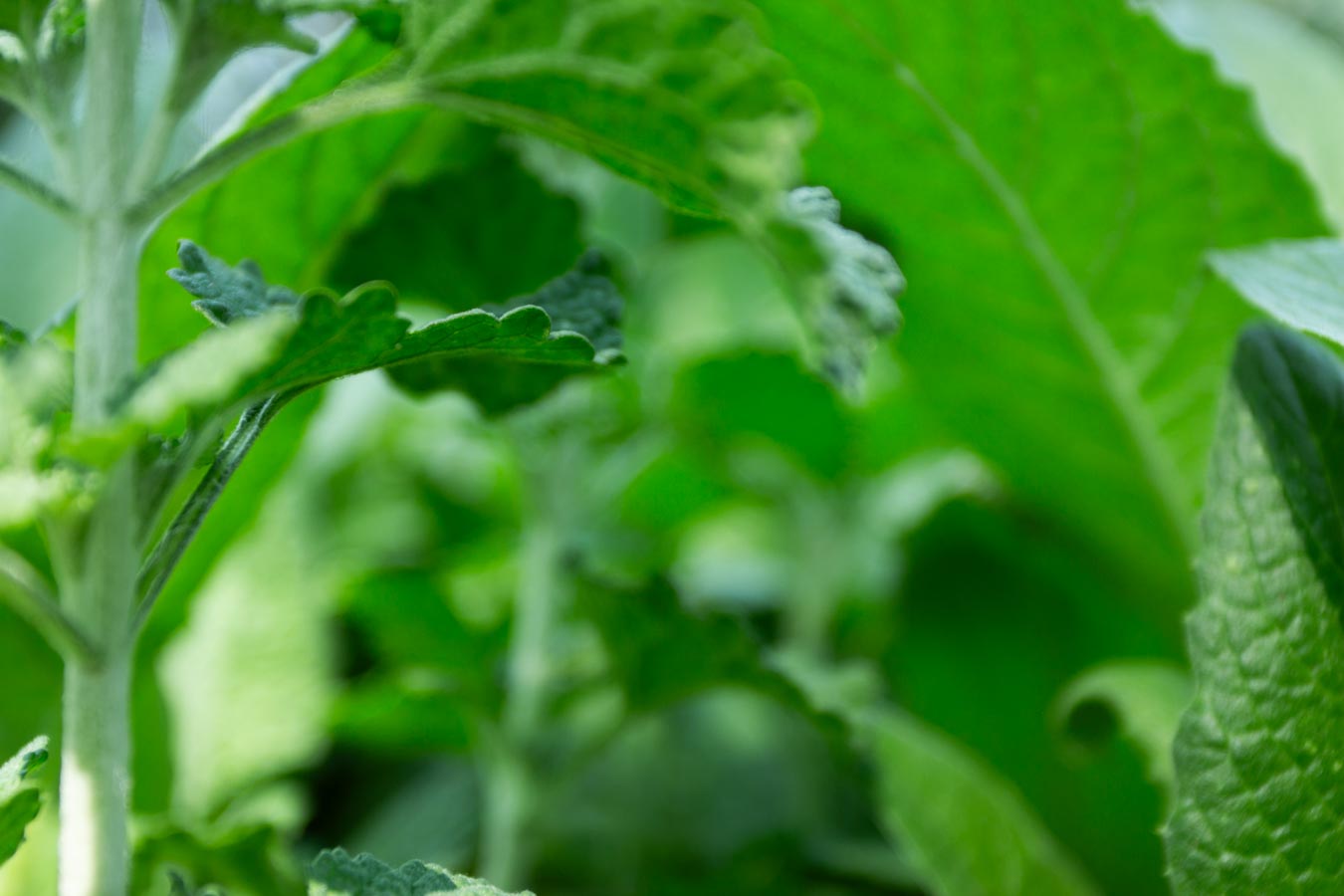
- The easiest vegetable (in my experience) is green beans. The easiest herb is mint, full stop. Mint will not go away no matter how hard you try! (You might have a different “easiest plant,” however.)
- Don’t grow vegetables you won’t eat. Just focus on what you like! There is nothing wrong with that. Your vegetable crops should be full of things you enjoy. Home gardening can take on many forms. You can focus on a couple of things at first. The breadth of your wide variety of plants is up to you.
- Most vegetable plants are annuals, meaning that they die at the end of the summer and have to be re-planted the next year. However, there are a few perennial vegetables, such as Jerusalem Artichoke and Asparagus. These come back year after year! Most berries and herbs are perennial as well, but some, such as Rosemary, are considered “tender perennial plant.” In Zone 6 where I live, Rosemary is not hardy enough to survive the winter, so I grow it as an annual. But, in a warmer zone, it will grow continually and produce a good crop.
- You don’t need plenty of space to have a bountiful harvest for one family. The temperatures, growing season, amount of sunlight/shade, and soil quality are more important than having multiple acres to work with.
- In order to grow your own vegetables and herbs, especially salad greens, you will need to keep the slugs away. (I can’t think of any creepy crawly that is more disgusting than a slug.) A slug’s favorite vegetable is lettuce, and they will be the death of your leafy greens. Slugs detest salt, so I opt for an epsom salt fertilizer on my lettuce. There are other “slug traps,” such as shallow bowls of beer, but the epsom salts work well for me.
- Your first harvest of fresh vegetables and herbs may or may not meet expectations. There might even be a completely missing item due to the early demise of a plant (for me, that was zucchini last year), or something else you weren’t expecting. However, celebrate the wins, no matter how close or far away you were from your goals. The fresh produce you DID get, even if it was only one tomato, is exciting! Learn from your experience and keep going. (Trust me, in the beginning, I had plenty of one-tomato harvests!) You will be surprised how much more you will know about gardening when you being your second season.
- When you harvest your herbs, hang them up to dry and save them for herbal teas or seasonings. The medicinal properties in the herbs will benefit you long-term, even if taken while well. Lemon Balm, Mint, Rosemary, Sage, Thyme, and many others are great additions to your winter pantry.
- A great way to preserve fresh produce for future months is to pressure can or water-bath can. (Yes, there is a difference! It is important to use the correct canning method. Many types of vegetables, such as green beans, cannot be water bath canned – they will go bad in the jar. When it comes to canning, the best way really is the ONLY way, so be sure to follow the instructions carefully.) I could write books about this topic, so I will link some resources below, but suffice it to say that without canning, you would have to eat a lot of root veggies and leafy crops in August and have nothing to eat later in the year! Homesteading Family with Josh and Carolyn have a fantastic video about canning beef stew, where you can safely use up all of your carrots and onions to be eaten later. Melissa K. Norris has amazing information about canning practices and safety. I also constantly refer to my Ball Blue Book of Canning for canning tips and recipes.
As each growing season springs to life and then fades back again year after year, I can see how this is not just another way of getting fresh food. It is a way of harvesting directly from the vegetable and herb plants and filling your pantry not just today, but perhaps for a below-freezing day next January, when you crack open a pressure-canned Mason jar of chicken soup with home grown peas and carrots. Or, even in a chilly late March, when you serve up warm cinnamon applesauce that you canned in the fall. A handful of fresh herbs tossed into the dinner you are making is an exquisite luxury. The art of growing, harvesting, and preserving is a beautiful and nearly forgotten skill, a skill many of our grandmothers and great grandmothers had.
Your own garden is your tiny slice of earth, given to you by God to “tend and keep.” It is a blessing as well as a privilege.
Gardening also provides wonderful family bonding experiences, too. Last year, tiny striped swallowtail caterpillars overran our fennel. I was concerned at first that the caterpillars would not leave any for us, contemplating what to do – but caterpillars and butterflies are such beneficial insects, I had to sacrifice a fennel plant for them. I decided to let the caterpillars have it. We checked those fennel plants every day to see if we could watch them transform into their characteristic “J” shape and form a chrysalis. It was so worthwhile; in just a week we had beautiful swallowtails all over the garden. (Hopefully they laid eggs for next year – fingers crossed!)
Over time, I eventually transformed from saying, “I’d like to save money on fresh vegetables” to being a fully commit-able crazy person with a full collection of seed starting trays, soil blockers, hand trowels, natural fertilizers, and of course, tons of seeds. My kitchen garden has become a permanent fixture, and I am not complaining.
Gardening FAQs:
What are the benefits of having a vegetable garden?
The benefits outweigh the fresh produce. Gardening is good for your mental and physical health and also improves your diet by filling it with nutritious, fresh food.
Is a vegetable and herb herb garden worth it?
Herbal plants are extremely easy to grow. Once you put a mint plant in the ground, you will have mint for life! If you plant a little sage, thyme, marjoram, lavender, and mint, they will mostly take care of themselves. They are hardy perennials, with the exception of Rosemary, which is a tender perennial. Herbs provide our food with flavor and our bodies with medicinal benefits. Dry your herbs to save for seasonings and tea. It is so delicious and rewarding.
What month should I start my vegetable garden?
In Zone 6 where I live, start your seeds in February and plant outside around the first week of May. However, this will be completely different if you live in another zone. I have created a free guide that shows the planting dates for each zone. You can get it here!
What is a good layout for a vegetable garden?
The most traditional layout is the rototilled “Victory Garden” layout, which just includes vegetables by the row. However, square foot gardening has become increasingly popular, in which you plant your seedlings into a raised bed box. These square foot gardens are organized into small plant groupings rather than rows. The benefit of square foot gardens is if your soil quality is poor and you have to bring your own soil in from an outside source.
What is the easiest vegetable for beginners to grow?
The easiest vegetable to grow, in my experience, is Green Beans. Green Beans are abundant and plentiful no matter how many mistakes I make.
Can you grow vegetables without a garden area?
Yes! If you live in an apartment or have only a small yard, you can grow vegetables in containers, or even indoors! Many people have a potted herb garden in the kitchen, or lettuce growing on the windowsill. You don’t have to have multiple acres to grow a few things for yourself.
What do I need to get started?
Mostly, you need seeds, dirt, and a sunny patch of yard! However, these items might be of use to you as well:
- Square Foot Raised Beds (most of mine came from FB marketplace, but I also have a set of these.)
- Compost Bin and Turner
- Epsom Salt
- Salt spreader
- Watering can
- Planter
- Garden hose
- Soil blocker
If you enjoyed reading about Why I Grow a Vegetable and Herb Garden, you may also like:
- Easy Apple Cinnamon Oat Muffins – homemade breakfast does not have to be a drag. These protein packed, delicious muffins can be a quick and easy breakfast for your family.
- My Zero Waste Year and the Habits that Stuck – A while back, I set out on a journey to do everything the holistic way to save money. Here’s what I learned!
- Easy DIY Hand Soap – mixing your own soap used to sound so ridiculous to me. Who has time for that? With this recipe, it takes so little time and energy, it doesn’t make sense not to!
- Easy 2 Ingredient Skin Care – Many natural products, common household ingredients that you already have in your home, can replace high end skin products. Oils, clays, salt, juices, and basic dry baking ingredients can replace so many things. When I grocery shop, I rarely buy something that you can simply open and eat anymore, other than fruit. It is all individual ingredients that you have to process at home: flour, sugar, salt, beans, coffee, spices, etc.
- 34 Ways to Hygge in the Summer + Classic Lemonade Recipe – Summer is the time of year when the world has burst into full bloom, when the tiny sprouts from spring have reached peak glory. The early Summer morning is my favorite time to watch the dew glisten on the leaves, before the dog day afternoons kick in and makes us turn indoors. It is a perfect season – but then again, I say that about all of the seasons. Summer Hygge is the best time to create a relaxing atmosphere for your whole family – with a glass of a very simple All American Classic Lemonade.

2 Comments